Spinal Endoscope & Minimally Invasive Surgical Instruments Manufacturer | QuNaMai
Wishlist

{{ variable.name }}


Adapt to fine channels and facilitate precise clearance
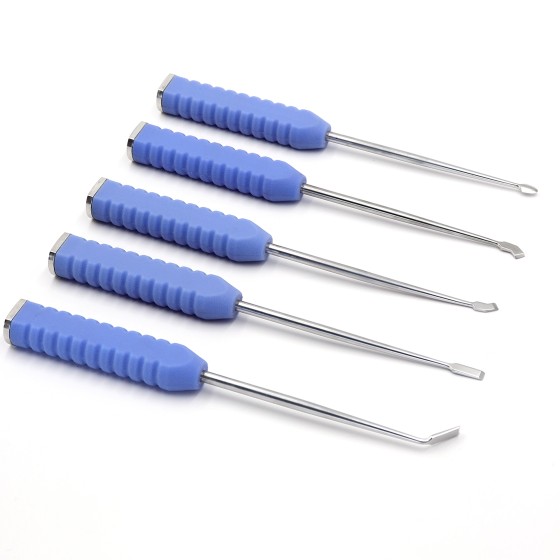
Sconor offers a variety of scraper specifications (reverse 3MM, large curve 3MM, forward curve 3MM, 5MM, 6MM), designed for different lesions and channels in various parts of the spine, achieving higher adaptability and operational flexibility during the operation.
Reverse opening: 3MMIt is suitable for clearing tissues hidden behind the field of vision, facilitating the handling of blind spots.
A large bend of 3MMThe large curvature is suitable for complex anatomical arcs, facilitating the bypassing of nerves and the scraping of deep tissues.
Turn forward by 3MMIt is suitable for conforming to the physiological curvature of the spine and the operation should be in line with the natural shape.
5MM diameterIt takes into account both passability and rigidity, and is suitable for most intervertebral space operations.
6MM scraperIt enhances support and is suitable for treating hard lesions, such as areas with bone hyperplasia.
Management of intervertebral disc protrusion
In typical cases of intervertebral disc protrusion such as L4-L5 and L5-S1, the scraper penetrates deep into the space to remove the degenerated nucleus pulposus and annulus fibrosus, providing a more thorough cleaning and offering a clear field of vision and a safe operating space for subsequent removal/decompression.
Spinal canal stenosis clearance
The thickened ligamentum flavum, osteophytes and scar tissue can be scraped off. Especially the forward-curved/reverse opening design can reach the narrow area of the anterior or lateral wall of the spinal canal, improving the accessibility of the surgery, precisely expanding the volume of the spinal canal and protecting the nerve structure.
The scraper is used to clean the endplate cartilage and articular surface cartilage of the vertebral body, expose the fresh bone surface, increase the roughness of the bone graft bed, and effectively improve the fusion efficiency.
In fusion procedures such as TLIF/PLIF, the forward-curved/large-curved scraper can reach deep into the intervertebral space to clear the residual cartilage tissue at the corners.
Angle matchingAccording to the different surgical areas, flexibly choose the forward bend/reverse opening/large bend design to conform to the natural anatomy.
Operational safetyWith the visual guidance of endoscopy, the scraper can precisely remove the target tissue, reducing the risk of nerve/vascular damage.
Scraping strategyStratified and progressive scraping should be carried out to avoid one-time strong scraping, control bleeding and damage to the surgical area.
Supports single-channel/dual-channel UBE surgery;
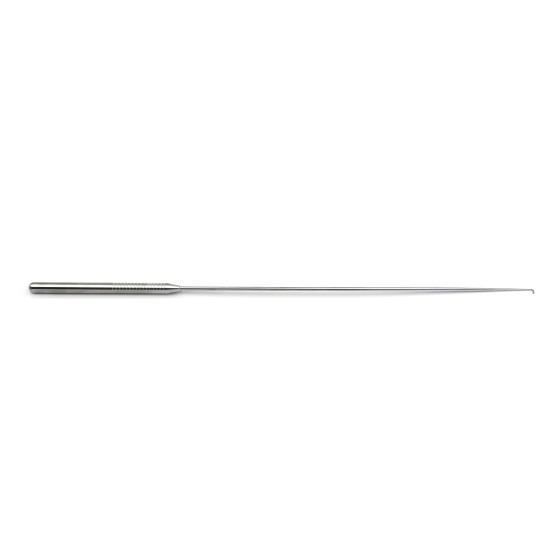
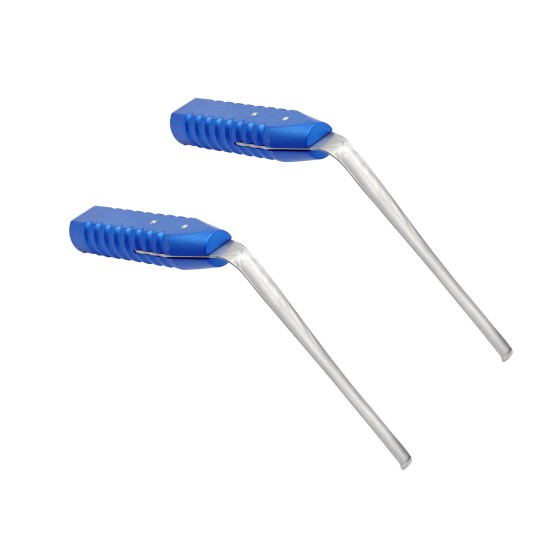
It can be used in conjunction with Sconor laminectomy forceps, nerve stripping hooks, etc., to form a complete operation chain.
Meet the requirements of full-segment decompression/clearance/fusion operations for the cervical, thoracic and lumbar vertebrae.
| Surgical instruments | |
| Material | Stainless steel |
| Cryogenic plasma | Autoclaving |

{{ item.content }}

{{ item.created_at_format }}
{{ item.reply }}
To find out more about our products and solutions, please fill out the form below and one of our experts will get back to you shortly.