Spinal Endoscope & Minimally Invasive Surgical Instruments Manufacturer | QuNaMai
Wishlist

{{ variable.name }}


Structural features and advantages
The features of the fiber ring knotter
Fine design: The design of the annulus fibrosus knotting device is usually quite ingenious, allowing for flexible operation within the narrow UBE surgical passage. Its head can be specially bent or angled, facilitating the knotting of the annulus fibrosus within the complex anatomical structure inside the spine. This meticulous design can ensure the accuracy of the knotting position and prevent damage to important tissues such as peripheral nerves and blood vessels during the knotting process.
Good grip and operation feel: To facilitate doctors' operation, the handle part of the fiber ring knotter generally takes into account ergonomic principles, providing a comfortable grip experience and preventing doctors' hands from getting tired easily during long surgical operations. Meanwhile, the design of the operation part enables doctors to precisely control the force and tightness of the knot, ensuring the firmness of the annulus fibrosus after suturing.
Features of the knot pusher
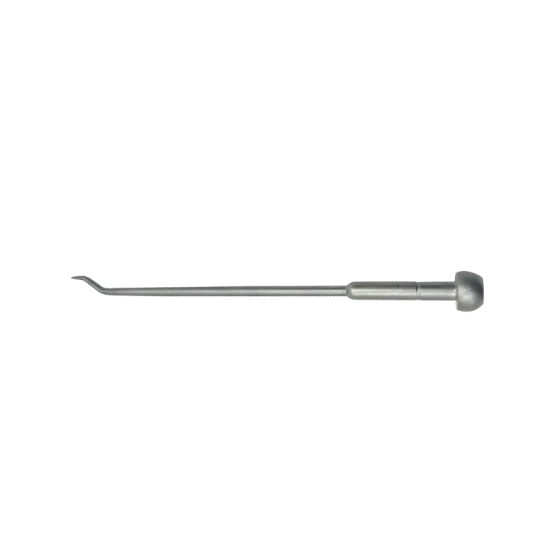
Precise knot pushing: The knot pusher is mainly used to push the tied knots tightly. Its head shape and size are suitable for contact with the knots on the fiber ring and can precisely push the knots to the appropriate position. Its design can effectively prevent the loosening or displacement of the knots during the knot pushing process, ensuring the reliability of the sewing.
Strong adaptability: The knotting device can be well used in conjunction with the annulus fibrosus knotting device, adapting to different types of suture materials and nodule sizes, enabling it to play a role in various UBE spinal endoscopic surgical scenarios. Whether it is a fine absorbable suture or a slightly thicker non-absorbable suture, the knotter can firmly fix the knot on the fiber ring.
Features of the Needle Holder (Company Design)
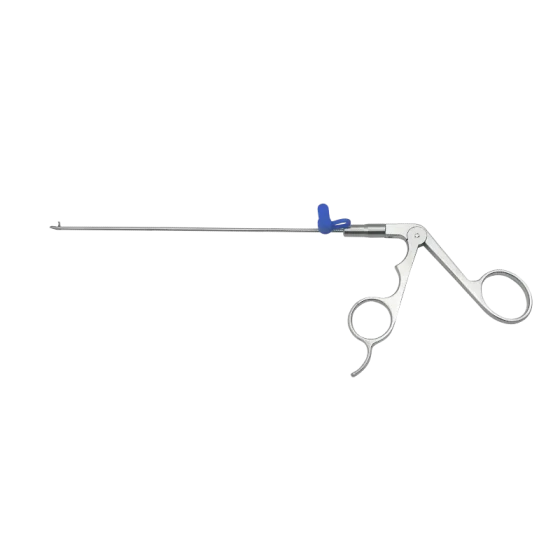
Stable clamping: The needle holder designed by the company can stably hold the suture needle, ensuring that the needle does not shake or fall off easily when suturing annulus fibrosus or hard membranes. The jaw part can be designed with special anti-slip features, such as textured or elastic gaskets, to increase the friction with the needle tip and enhance the stability of the needle holder.
The Angle and size are suitable for UBE surgery: The Angle and size of the needle holder are tailor-made for UBE spinal endoscopic surgery, which can smoothly pass through the UBE surgical channel and has an appropriate operating Angle inside the spine, facilitating the doctor to perform suturing operations in a limited space. For instance, it can have a certain bending Angle, enabling doctors to accurately pass the needle through the annulus fibrosus or dura mater without interfering with the surrounding tissues.
Application scenarios in UBE spinal endoscopic surgery
The application of suture for ruptured rings
Precise suture: When the annulus fibrosus ruptures, use a needle holder to precisely hold the suture needle and pass the suture thread through the edge of the ruptured annulus fibrosus. Then use a fiber ring knotter to tie the knot. Due to its meticulous design and good operability, it can complete a firm knot in the complex environment inside the spine. For instance, after a discectomy, suturing the annulus fibrosus can prevent the nucleus pulposus from protruding again. During this process, the fiber ring knotter can effectively knot within a limited space, ensuring the integrity of the fiber ring.
Fixation and reinforcement of knots: After tying the knot, the knot pusher comes into play, pushing the knot tightly against the surface of the fiber ring, making the sewing more secure. This series of operations can effectively repair ruptured annulus fibrosus and reduce the occurrence of postoperative complications. Meanwhile, the combined use of these tools can achieve precise suturing and reinforcement, which is conducive to the healing of the annulus fibrosus and promotes the postoperative recovery of patients.
Application in Dural rupture Repair surgery
Fine operation to prevent cerebrospinal fluid leakage: In the case of dura mater rupture, the use of needle holders, annulus fibrosus knotting devices and knotting thrusters is also crucial. The needle holder helps the doctor thread the needle through the edge of the ruptured membrane, and the annulus fibrosus knotting device performs the knotting operation. Because the repair of the dura mater requires more precise operations to prevent cerebrospinal fluid leakage, the accuracy and stability of these tools can meet the requirements. For instance, in spinal surgery, if the dura mater is accidentally injured, this collaborative operation can quickly and accurately suture, prevent cerebrospinal fluid leakage, and reduce the risk of neurological complications such as postoperative infection.
Ensure the quality of repair: During the knotting and fixation process after dura mater suture, the knot pusher should ensure that the knot is neither too loose nor too tight, to avoid suture failure due to overly loose knots. This tight suture is of great significance for protecting the spinal cord and nerve tissue and maintaining the normal circulation of cerebrospinal fluid, which helps patients maintain good neurological function after surgery.
Operation precautions and skills
Precautions for Operation
Visual operation is crucial: UBE spinal endoscopic surgery relies on a clear field of vision. When using these tools to suture the annulus fibrosus or dura mater, it is necessary to ensure that the endoscope has a good field of view and can clearly see the contact position between the tool and the tissue. Otherwise, it is easy to cause tissue damage due to misoperation caused by insufficient vision.
Avoid tissue damage: Special attention should be paid during the operation to avoid damaging important tissues such as nerves and blood vessels. The space around the annulus fibrosus and the hard membrane is limited, so one must be very careful when operating the tools. For instance, when threading a needle with a needle holder, it is essential to ensure that the direction of needle insertion does not touch the peripheral nerves. During the process of knotting, excessive force should be avoided from squeezing the surrounding tissues. "Tools
Maintenance and inspection: Before operation, it is necessary to check whether these tools are in good condition, such as whether the jaws of the needle holder can be clamped normally, and whether the heads of the fiber ring knotter and the knot pusher are deformed, etc. After operation, the tools should be properly cleaned and maintained to ensure their performance for the next use. Operation
Hint
Tips for using a needle holder: When holding a needle holder, the correct posture should be adopted to ensure that the fingers can flexibly control the opening and closing of the jaws. During the needle insertion process, adjust the Angle of the needle holder based on the anatomical structure of the surgical site and the images displayed by the endoscope to ensure that the needle smoothly passes through the annulus fibrosus or dura mater. You can first bring the needle tip close to the target tissue, and then slowly advance it forward while keeping the needle tip stable. Fiber ring
Knotting tool usage tips: When knotting, be familiar with the operation method of the fiber ring knotting tool. Use the knotting tool flexibly according to the length of the suture and the type of knot to be knotted (such as surgical knots, square knots, etc.). Generally, a basic knot is tied first, and then the second knot is tied through rotation or cross operation. Pay attention to controlling the force of knotting to avoid the stitches breaking.
Tips for using a knot pusher: When using a knot pusher, accurately align the head of the pusher with the knot to be tied, and then slowly and steadily apply pressure to push the knot head in the direction of the fiber ring or hard membrane. During the process of pushing the knot, it is necessary to observe the position and tightness of the knot head, and adjust the direction and force of pushing the knot appropriately as needed to ensure that the knot head is firmly fixed in the correct position.
| Surgical instruments | |
| Material | Stainless steel |
| Cryogenic plasma | Cryogenic plasma |

{{ item.content }}

{{ item.created_at_format }}
{{ item.reply }}
To find out more about our products and solutions, please fill out the form below and one of our experts will get back to you shortly.