Spinal Endoscope & Minimally Invasive Surgical Instruments Manufacturer | QuNaMai
Wishlist

{{ variable.name }}


The manifestation of material and craftsmanship advantages in surgery
The guarantee of high-quality stainless steel and complete craftsmanship
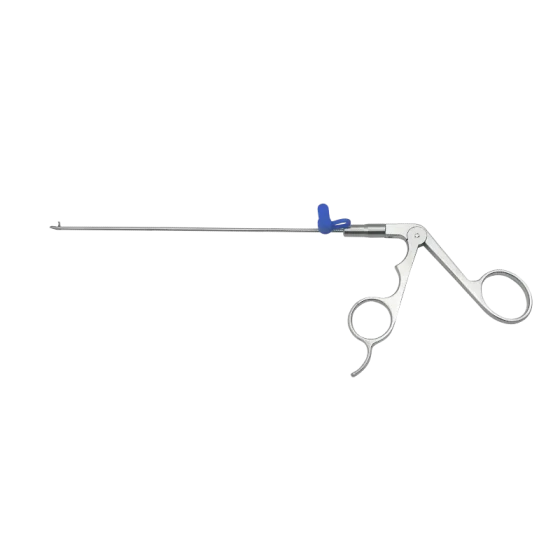
The UBE cervical nucleus pulposus forceps are made of high-quality stainless steel, which lays a solid foundation for the quality and functionality of the equipment. The strength and corrosion resistance of stainless steel ensure that the nucleus pulposus forceps can withstand repeated operational stress during the operation and are not easily damaged. A complete production process system further ensures the quality and stability of the products. In UBE dual-channel spinal endoscopic surgery, especially in cervical spine surgery, this high-quality nucleus pulposus forceps can reliably complete various operational tasks. For instance, in the surgical treatment of cervical intervertebral disc protrusion, the nucleus pulposus forceps need to enter the intervertebral space multiple times to grasp the nucleus pulposus tissue. High-quality materials and craftsmanship enable it to maintain excellent performance, preventing surgical interruptions or accidents caused by instrument quality issues. Overload protection
The function of the device
The overload protection device is a major highlight of the nucleus pulposus forceps. During surgical operations, various tissue resistances may be encountered, such as tough annulus fibrosus tissue or adhered nucleus pulposus tissue. Overload protection devices can prevent equipment from being damaged due to excessive force. This not only extends the service life of the instruments, reduces the cost expenditure of the hospital, but also ensures the continuity of the operation during the surgery. For instance, when grasping larger or closely adhered nucleus pulposus, the overload protection device can prevent the nucleus pulposus forceps from being overly deformed or damaged, ensuring that the nucleus pulposus tissue can be accurately grasped and removed each time.
The design advantages that conform to the UBE surgical concept
The concept of the compact and exquisite equipment is in line
The UBE surgery emphasizes the use of small and exquisite instruments for precise operation. This 2.5MM×180MM nucleus pulposus forceps well meets this requirement. In cervical UBE surgery, the spinal anatomy is complex and the surrounding nerves and blood vessels are densely distributed. The relatively small diameter of 2.5MM enables the nucleus pulposus forceps to smoothly pass through the surgical channel and enter the narrowed surgical sites such as cervical intervertebral discs without causing excessive compression on the surrounding tissues. The 180MM length provides sufficient extension range for the operation, facilitating the doctor to perform the surgery in an appropriate operating position. For instance, when performing nucleus pulposus removal in cervical intervertebral Spaces such as C3-C4 or C5-C6, this compact and exquisite nucleus pulposus forceps can flexibly reach the target position and minimize interference with the surrounding tissues.
The blunt tip design enhances safety
The blunt tip design of the forceps head is to reduce damage to the nerve roots. In cervical UBE surgery, the protection of nerve roots is of vital importance. Compared with pointed instruments, blunt nucleus pulposus forceps can avoid accidental punctures or cuts to the nerve roots when entering the intervertebral space or operating near the nerve roots. For instance, when the nucleus pulposus forceps are used to capture the nucleus pulposus tissue close to the cervical nerve root, the blunt head design can act as a "buffer", reducing the risk of nerve root injury and enhancing the safety of the surgery.
The application effect of long cup-shaped forceps heads in surgery
The efficiency of nucleus pulposus capture
The long cup-shaped forceps head design increases the contact area with the nucleus pulposus tissue and improves the efficiency of nucleus pulposus grasping. In cervical UBE surgery, the nucleus pulposus tissue is usually soft and irregular in shape. The long cup-shaped forceps head can better fit the shape of the nucleus pulposus, grasping it like a "small spoon". This design is highly effective for capturing free nucleus pulposus fragments or larger pieces of nucleus pulposus tissue. For instance, in cases where cervical intervertebral disc degeneration causes nucleus pulposus fragments to become free, a longer cup-shaped forceps head can more easily collect these fragments, thereby reducing the operation time and patient trauma.
The accuracy of tissue cleaning
In addition to grasping the nucleus pulposus, the long cup-shaped forceps head can also be used to clear other tissue fragments and diseased tissues within the surgical area. In cervical UBE surgery, for instance, when removing degenerated annulus fibrosus tissue, inflammatory granulation tissue, etc., the long cup-shaped forceps head can accurately pick up and remove these tissues. Its shape advantage enables it to selectively remove diseased tissues during the cleaning process without accidentally pinching the surrounding normal tissues, which helps to keep the surgical area clean and creates favorable conditions for the recovery of the cervical vertebrae after the operation.
| Surgical instruments | |
| Material | Stainless steel |

{{ item.content }}

{{ item.created_at_format }}
{{ item.reply }}
To find out more about our products and solutions, please fill out the form below and one of our experts will get back to you shortly.