Spinal Endoscope & Minimally Invasive Surgical Instruments Manufacturer | QuNaMai
Wishlist

{{ variable.name }}


Structural features and advantages
Dimensional characteristics
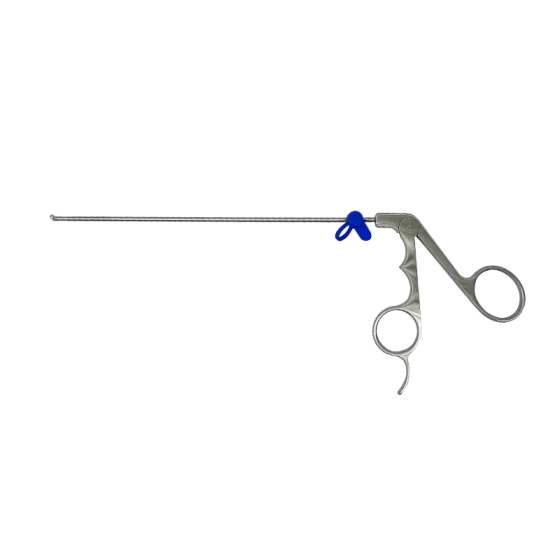
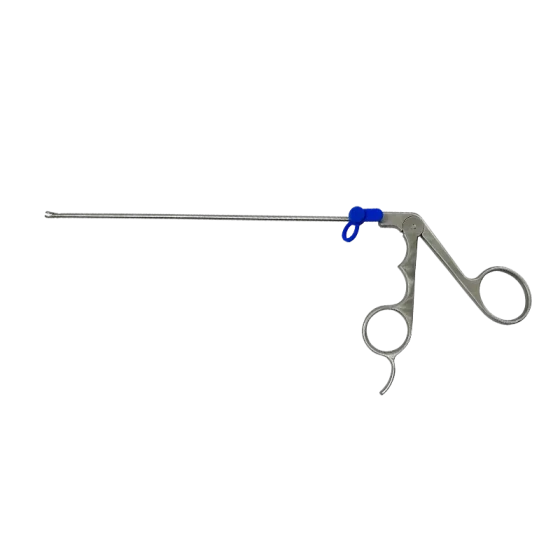
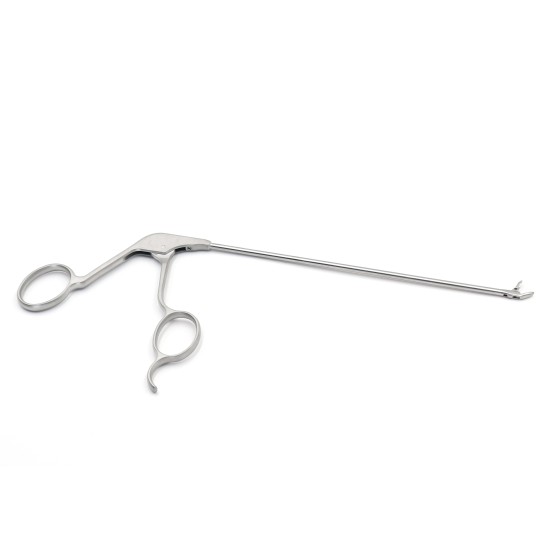
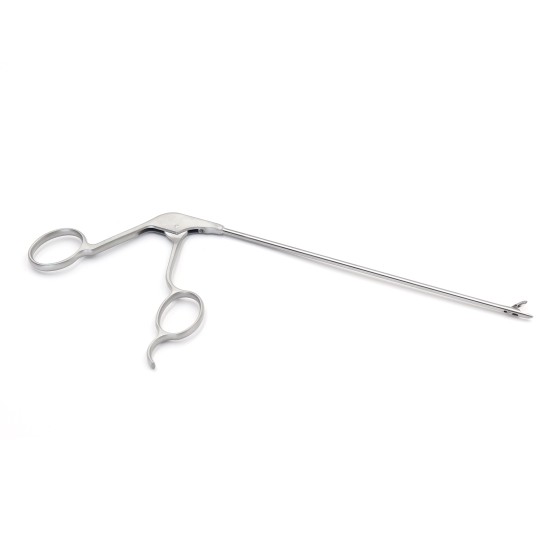
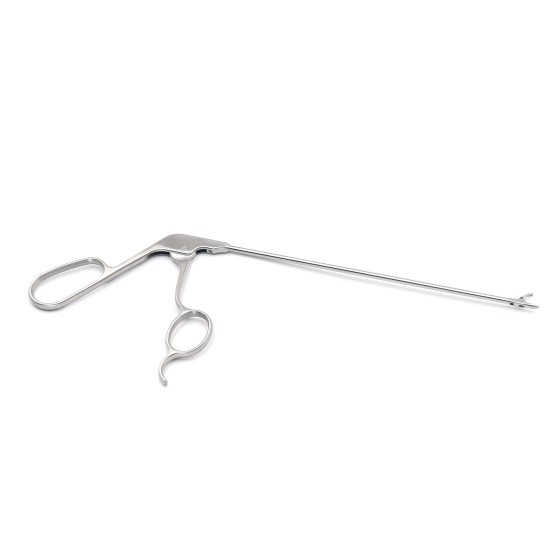
The 3.5MM diameter design enables the scissors to pass smoothly through the UBE surgical channel. In spinal surgery, the surgical passage is relatively narrow. Such a size ensures that the instruments can reach the surgical site without exerting excessive pressure on the tissues around the passage. The 180MM length provides sufficient extension range for internal spinal operations, facilitating doctors to handle tissues at appropriate operating positions.
Straight design
The straight structure enables the scissors to have better linear accessibility during operation. In some spinal surgery scenarios, such as dealing with relatively straight anatomical areas or when it is necessary to insert instruments in a straight line for cutting, straight scissors have more advantages. For instance, when cutting the protruding nucleus pulposus tissue in the center of the intervertebral disc, or when dealing with the diseased tissue along a relatively forward or backward straight path within the spinal canal, the target position can be reached more directly.
Needle-free design
The needle-free design makes the operation of the scissors more flexible. Doctors can freely control the force and Angle of the cut based on the specific conditions of the tissue, such as thickness and toughness. Compared with the fixed design of scissors, this flexibility can better adapt to different surgical needs. For example, when dealing with soft nucleus pulposus tissue and hard osteophyte tissue, the cutting method can be adjusted at any time according to the actual situation. Avoid causing damage to the tissue due to the fixed shearing method.
Application scenarios in spinal surgery
Application of Intervertebral disc surgery
During the surgery for intervertebral disc protrusion, a straight scissors can be used to cut the protruding nucleus pulposus of the intervertebral disc. After the protruding nucleus pulposus is located through an endoscope, the scissors can reach the nucleus pulposus tissue along the channel. For larger nucleus pulposus tissues, they can be cut into smaller pieces to facilitate subsequent removal with a nucleus pulposus forceps. In addition, for the ruptured part of the annulus fibrosus that occurs during the process of intervertebral disc degeneration, if its edge is irregular or affects the surgical operation, this scissor can also be used for trimming to make the surgical area more neat.
Spinal canal decompression surgery
In the surgical treatment of spinal stenosis, direct cutting can be used to deal with the diseased tissues within the spinal canal. For instance, when there is hyperplastic scar tissue in the spinal canal that compresses the nerve, direct cutting can reach the lesion site directly and cut the scar tissue into appropriate small pieces for easier cleaning. For some smaller osteophytes, if their positions are convenient for linear operation, they can also be partially removed with scissors to reduce the compression on the nerves and achieve the purpose of spinal canal decompression. Organization
Separation and debridement
In spinal surgery, it is often necessary to separate adhered tissues and clear debris from the surgical area. Direct shearing can be used to separate soft tissues that are adhered together. For instance, after spinal trauma or surgery, soft tissue adhesions may occur. By cutting the adhered area into small sections, the tissue can be effectively separated. At the same time, scissors can also be used to clear inflammatory tissue fragments and small calcification foci within the surgical area, keeping the surgical area clean and facilitating postoperative recovery.
Operation precautions and skills
Precautions for Operation
As this operation is performed under endoscopic visualization, it is essential to ensure a clear endoscopic field of view and accurately determine the relationship between the scissors and the surrounding tissues. During the insertion and operation, special attention should be paid to avoiding damage to important tissues such as nerves and blood vessels. Because the needle-free design requires more precise force control, when in use, one should be careful to avoid excessive force to prevent tissue tearing or bleeding.
Operation skills
Insertion technique: Based on the anatomical path observed by the endoscope and the structural characteristics of the surgical site, slowly insert the shearing forceps along a straight line along the natural anatomical gap or the established working channel. During the insertion process, it is necessary to pay attention to observing the reactions of the surrounding tissues to avoid forcing the insertion and damaging the surrounding tissues.
Shearing technique: When performing shearing operations, first gently bring the cutting edge of the shearing pliers close to the target tissue, and then appropriately adjust the shearing Angle and force according to the size, thickness, toughness, etc. of the tissue. For softer tissues, shearing can be carried out with less force and a larger contact area of the blade. For harder tissues, such as osteophytes, the force can be appropriately increased, but it is important to perform small-scale shearing in multiple sessions. Throughout the entire operation process, it is necessary to combine the real-time observation of the endoscope and flexibly adjust the position and operation method of the shearing forceps to achieve the best surgical outcome.

{{ item.content }}

{{ item.created_at_format }}
{{ item.reply }}
To find out more about our products and solutions, please fill out the form below and one of our experts will get back to you shortly.