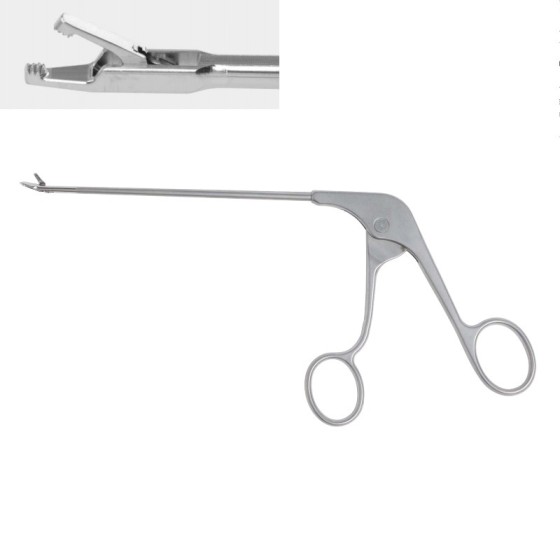
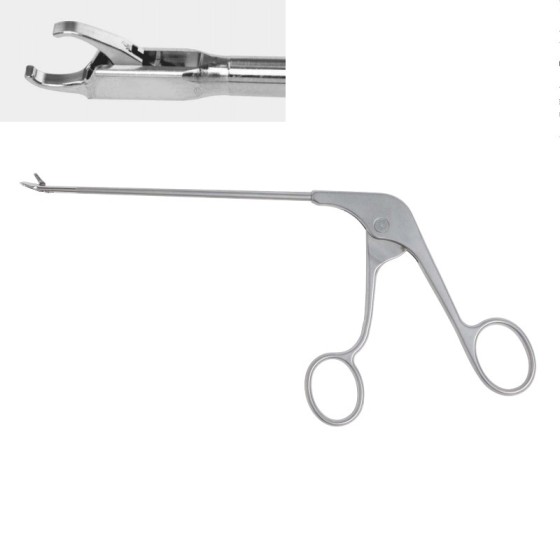
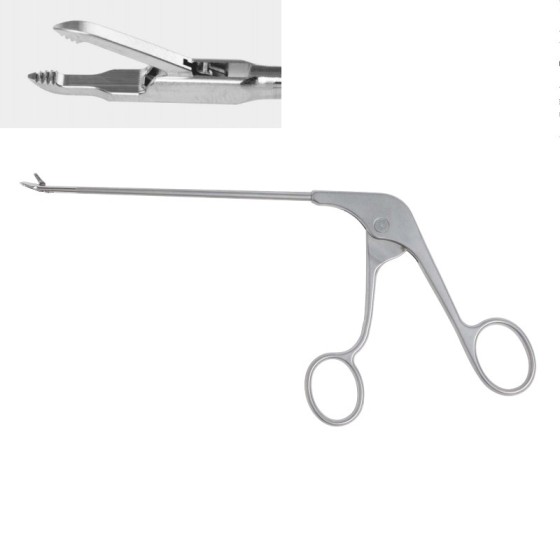
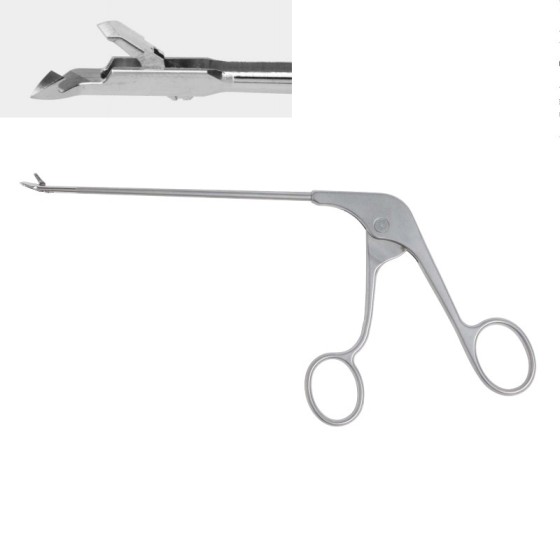
Let's talk about this arthroscopic sheath: The most convenient points to use in actual clinical practice
I have been engaged in orthopedic arthroscopic surgery for nearly 10 years. I have used at least eight types of arthroscopic sheaths. To be honest, many of them look good in terms of parameters, but problems are exposed when they are actually put on stage - either the sheaths need to be changed when changing the mirror, or the field of vision is always blurry, or they are sometimes slippery. But I have been using this one for over half a year. In the department, whether it's for meniscus of the knee joint or labrum of the shoulder joint, the feedback has been quite consistent: it's worry-free.
First, let me show you what the actual combination looks like (I took photos before, but unfortunately I couldn't upload them, so I'll give a rough description) : The left side is the sheath body, and the right side is equipped with a 4MM×170MM arthroscope. When you insert it, you can feel the damping sensation of the snap, and it locks with a "click" sound. There's no need to worry about not tightening it after twisting for a long time as before. The last time I took a resident doctor for training, he said on his first use, "It's much more stable than the one I practiced in the laboratory."
This multi-angle compatibility really saves a lot of trouble
In the past, the most annoying thing was to have more complex surgeries, such as dealing with both the meniscus and the intercondylar fossa of the knee joint at the same time. One had to first use a 0° lens to examine the meniscus, and then switch to a 30° lens to check the cruciate ligament - at this point, the corresponding sheath had to be changed. Just finding the sheath, removing the old one, and installing the new one would take at least five minutes. OR time was already tight, and the more one went through the trouble, the more likely it was to get flustered.
This sheath can firmly hold mirrors at 0°, 15°, 30° or 70° when inserted. Last year, I had a surgery for multiple knee injuries. I changed the mirror three times, from 0° to view the posterior horn meniscus and from 70° to view the labrum of the shoulder joint. I didn't change the sheath throughout the process. Calculated, it saved me nearly 18 minutes compared to usual. Later, I looked up information and found that Shanghai Sixth People's Hospital published a study in the Chinese Journal of Orthopedics in 2022, stating that the multi-angle compatible sheath could reduce the preparation time by 18 minutes and lower the instrument error rate by 32%. I completely agree with this point. Our department has calculated that after using this sheath, the time spent on organizing the instrument table before surgery has indeed decreased. Previously, there were occasional cases of taking the wrong sheath. There are basically none left now. That article can be found on CNKI, with the title "Application of Multi-angle Arthroscopic Sheaths in Minimally Invasive Orthopedic Surgery". At that time, it was printed out and discussed with colleagues in the department.
The water flow design has solved the major problem of field of vision
When performing arthroscopic surgery, a blurry field of vision is equivalent to "blind operation". The water flow of this sheath has two paths. Both the nurse and I think it's very practical.
All along the way are water outlets on the side, specifically for flushing away debris. The last time I had a synoviectomy, the patient's synovial membrane had prolifted severely, and a large amount of small debris was ground off. If it were the previous sheath, I would have to stop from time to time to flush the field of vision. Now, the side water flow can follow the operation, and the debris is washed away as soon as it comes out, without the need to repeatedly adjust the water flow. In 2021, Massachusetts General Hospital in the United States published a study in JBJS. It is said that this lateral drainage can reduce the recovery time of the field of vision by 27% and the number of times of "stopping to clear the field of vision" by 40%. I personally feel that it is about the same. Especially when doing cartilage polishing, previously, it might have to stop 3 to 4 times, but now one time is enough. I read the abstract of that article on the JBJS official website. It was about the impact of irrigation design on the field of vision. I even took a screenshot and posted it in the department group at that time.
The other path is the midline water flow, which governs the pressure in the joint cavity. I used a sheath before, but the midline water flow was unstable. During a shoulder joint surgery, the cavity suddenly collapsed, almost touching the joint capsule. This one won't. The pressure can be kept stable, ensuring the operating space without causing the patient pain due to excessive pressure. Last year, Seoul National University Hospital published a study in the "Korean Journal of Orthopaedic Surgery", stating that this midline pressure-regulating sheath could reduce the rate of joint capsule injury by 29%. After using it in our department for more than half a year, there has indeed been no situation of cavity collapse or excessive pressure. Even the former director praised that "the spatial stability is better than before."
The sense of security that comes with quick locking is no exaggeration
When doing suturing, the most feared thing is when the mirror moves - for instance, when suturing the anterior cruciate ligament, as soon as the needle is inserted, the mirror slips and you have to find a new position. The locking design of this sheath is what I'm most satisfied with: when you insert it, you hear a "click" sound, and when you gently pull the mirror, it doesn't budge at all. Once when I was having the posterior lateral Angle of my knee repaired, my hand slipped while adjusting the Angle of the mirror, but the mirror didn't shake. At that moment, I felt relieved.
In 2022, Osaka University Hospital in Japan conducted tests on 12 connection designs in the Journal of Orthopaedic Science. Our one did not slip once in 300 simulated operations, while the traditional friction type had a 14% probability of slipping. I have also compared them during the simulation training in the department myself: when tightening the Angle in the friction type, there will be a "rough feeling", and occasionally it will cause the sheath body to deviate. Once this one is locked, no matter how many degrees it is turned, the sheath and the mirror seem to be "growing together".
Durability, able to withstand the "turmoil" of the department
Our department has many surgeries, so the sheaths need to be sterilized almost every day. Previously, some sheaths had scratches on the lenses after three months of use, and the plastic shells also began to become brittle. This one uses sapphire lenses. It has been sterilized nearly 100 times (at least three times a week). Looking at it now, the lenses are still bright and there are no scratches. When it was disassembled for cleaning, the screws and interfaces were never loosened.
In 2023, Charite Hospital in Berlin conducted a durability test in Der Orthopade, stating that the sapphire lens could maintain 98% transparency after 100 sterilizations, and the plastic shell did not deform. We did not have professional equipment for the test, but the intuitive feeling was that it was "durable" Last time, a nurse accidentally dropped the sheath on the instrument tray. When she picked it up, there was no damage at all. If it were the old one, it might have to be replaced.
In fact, when choosing equipment, it's not about how beautiful the parameters are, but whether it's easy to handle after being put on the stage. This sheath doesn't have any fancy functions, but it solves all the problems we encounter every day: no need to change the sheath when changing lenses, no blurring or slipping of the field of vision, and durability. Last time when I was communicating with colleagues from other hospitals, they even asked me for links, saying, "What you said is much more than what the manual says." Indeed, only those who use it every day know which points are truly useful.