Spinal Endoscope & Minimally Invasive Surgical Instruments Manufacturer | QuNaMai
Wishlist

{{ variable.name }}


On the Biomechanical Advantages and Clinical Application Value of QuNamai's specifically designed arthroscopic Surgical Instruments
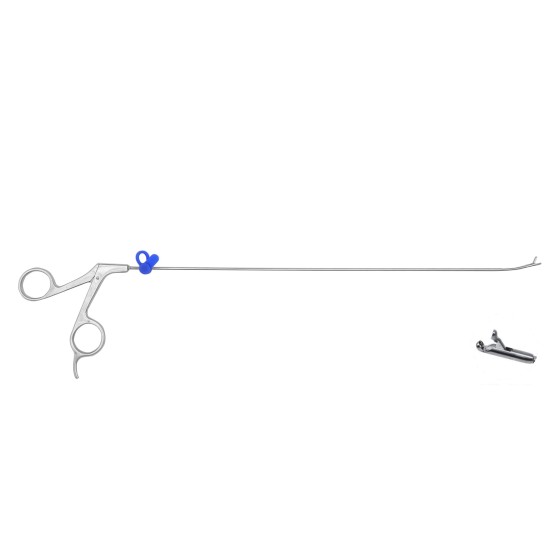
The core value of the specialized arthroscopic surgical instruments (duckbill type straight blue forceps, specification 3.2mm×120mm) designed and produced by QuNamai in clinical practice. This device is made of medical-grade stainless steel. Its design core lies in the integration of an ergonomic handle that conforms to the hand shapes of doctors in Asia, Europe and the Middle East with an efficient mechanical lever system. This study, by analyzing its material properties, biomechanical design and morphological parameters, demonstrates its key role in achieving precise, efficient and low-fatigue operation in arthroscopic surgery, thereby providing reliable hardware support for improving the success rate of surgery and the comfort of surgeons.
Key words: Arthroscopic surgical instruments Ergonomics Biomechanics Medical stainless steel Blue pliers QuNamai
1. Introduction
Arthroscopic surgery, as a minimally invasive surgical technique, its success highly depends on the efficient and precise interaction among the "surgeon - instrument - patient". Among them, the performance of surgical instruments is the key factor limiting the accuracy and efficiency of surgery. Traditional instruments often have problems such as poor hand feel, laborious operation, and mismatch with the surgeon's hand, which leads to surgeon fatigue and subsequently affects the surgical outcome. In response to this pain point, QuNamai has launched a series of carefully designed arthroscopic devices. This article will take one of the representative products - the duckbill type straight blue forceps (3.2mm×120mm) as an example, and deeply analyze the significant advantages of its innovative design in handling arthroscopic surgery from the perspectives of materials science, biomechanics and design morphology.
2. Materials and Methods: The core elements of equipment design
2.1 Fundamentals of Materials Science: The Outstanding Performance of medical-grade Stainless Steel
The main body of this device is made of medical-grade stainless steel (usually 316L or martensitic stainless steel). The selection of this material is based on its multiple core advantages
Excellent biocompatibility: Complies with standards such as ISO 7153 and ASTM F899, ensuring its inertness and safety in the human internal environment, with no risks of toxicity, allergenicity or carcinogenicity, and can withstand repeated high-pressure steam sterilization without corrosion.
Extremely high mechanical strength and wear resistance: It can withstand repeated biting and cutting operations and lever forces, ensuring that the jaws (duckbill design) remain sharp and precisely fit after long-term use, avoiding tissue slippage or tearing caused by wear.
Necessary weight and texture: It provides an appropriate counterweight for the equipment, enhancing the surgeon's operational stability and tactile feedback, and serves as the physical foundation for achieving precise control.
2.2 Ergonomic Design: Global Adaptability
The design of the QuNamai controller goes beyond the adaptation for a single regional population. Its innovation lies in the comprehensive consideration of the hand shape and size big data of doctors in Asia, Europe and the Middle East. This means:
Handle body contour and curvature: Optimized, it can naturally fit the grip curves of hands of different sizes, achieving a tension-free full-hand grip.
The size and spacing of the finger rings: They have been scientifically distributed, allowing for operation while wearing gloves and providing stable support points and comfortable force application space for the fingers, effectively preventing joint strain caused by long-term operation.
Surface treatment: Usually matte or special texture treatment is adopted. Even in a slippery surgical environment, it can provide sufficient friction to prevent slipping and ensure the absolute reliability of operation.
2.3 Core of Biomechanics: Optimization of the Lever System
The technical essence of this device lies in the "mechanical lever design for smooth biting and cutting". Its internal transmission mechanism has been precisely calculated:
Optimized Fulcrum position ** : The fulcrum is set at the optimal force-arm ratio position, enabling the operator to generate the maximum biting force (output force) at the jaws with the minimum finger force (input force).
Low-friction transmission: The internal joints are processed and polished with high precision to minimize internal friction losses, ensuring efficient and direct force transmission with a clear and "smooth" feel.
Labor-saving effect ** : This design significantly reduces the muscle load required to perform biting, cutting, grasping and other actions, greatly alleviating the fatigue of the surgeon during long and high-precision surgeries, which is particularly beneficial for handling complex cases.
2.4 Morphological parameters: The clinical significance of 3.2mm×120mm duckbill straight type
Diameter of 3.2mm: This is a size compatible with standard arthroscopic working channels, allowing for flexible movement within most joints (such as knees, shoulders, ankles, etc.), combining operational intensity with minimally invasive techniques.
Length 120mm: This length provides an ideal operating lever, ensuring accessibility to deep joint cavities (such as the posterior knee joint space) while avoiding tremors or control delays caused by excessive length.
Duckbill-shaped straight design: The "duckbill-shaped" jaws offer a large biting area and unique angular formation, making them highly suitable for efficient biting, grasping, and removal of soft tissues such as meniscus fragments, free bodies, and hyperplastic synovium. The "straight" design offers excellent directivity and the convenience of linear operation, making it the most fundamental and widely used instrument form in arthroscopic surgery.
3. Results and Discussion: Comprehensive Role in Arthroscopic Surgery **
Based on the above design, this instrument plays the following core roles in arthroscopic surgery:
1. Enhance surgical precision: Excellent hand feel transmission and stable controllability enable surgeons to achieve millimeter-level fine operations, accurately bite off diseased tissues, and protect healthy structures.
2. Enhance surgical efficiency: The smooth biting and cutting ability as well as the powerful grasping force make tissue processing rapid and efficient, shorten the operation time, and thereby reduce the anesthesia risk and infection probability for patients.
3. Enhance the surgeon's endurance: The global ergonomic design and the effortless lever system effectively delay muscle fatigue, enabling the surgeon to maintain a high level of operational stability during long surgeries. This is crucial for ensuring the success of complex surgeries.
4. Ensuring surgical safety: Reliable material performance and precise manufacturing processes eliminate extreme risks such as instrument breakage and debris residue inside the body, ensuring patient safety.
4. Conclusion
This arthroscopic surgical blue forceps from QuNamai is by no means a simple tool manufacture; rather, it is a product of the in-depth integration of materials science, ergonomics, biomechanics and clinical medicine. The ** medical-grade stainless steel ** it adopts ensures safety and durability; The handle design based on global multi-regional data achieves ultimate operator compatibility and comfort. The optimized mechanical lever system brings an unparalleled "smooth biting and cutting" operation experience. Ultimately, these advantages converge on the just-right specification of 3.2mm×120mm duckbill-shaped straight type, making it a reliable, efficient and user-friendly key tool for treating soft tissue lesions under arthroscopy, representing an important trend of modern sports medical equipment moving towards greater precision and humanization.
---
| Surgical instruments | |
| Features | Prevent adhesion process |
| Material | Special stainless steel |
| Cryogenic plasma | Autoclaving |

{{ item.content }}

{{ item.created_at_format }}
{{ item.reply }}
To find out more about our products and solutions, please fill out the form below and one of our experts will get back to you shortly.