
Literature on the stepwise dilator of spinal endoscopic surgical instruments
Summary of Core Information of the Stepwise Dilator for Spinal endoscopic Surgery (SCONOR brand) (with Supplementary Literature)
Based on the information on the product's official website and the research literature on transforaminal endoscopic technology, a further in-depth summary is made from the dimensions of technical adaptability, clinical evidence chain, and minimally invasive value as follows:
Anatomical verification of the technical characteristics of the product
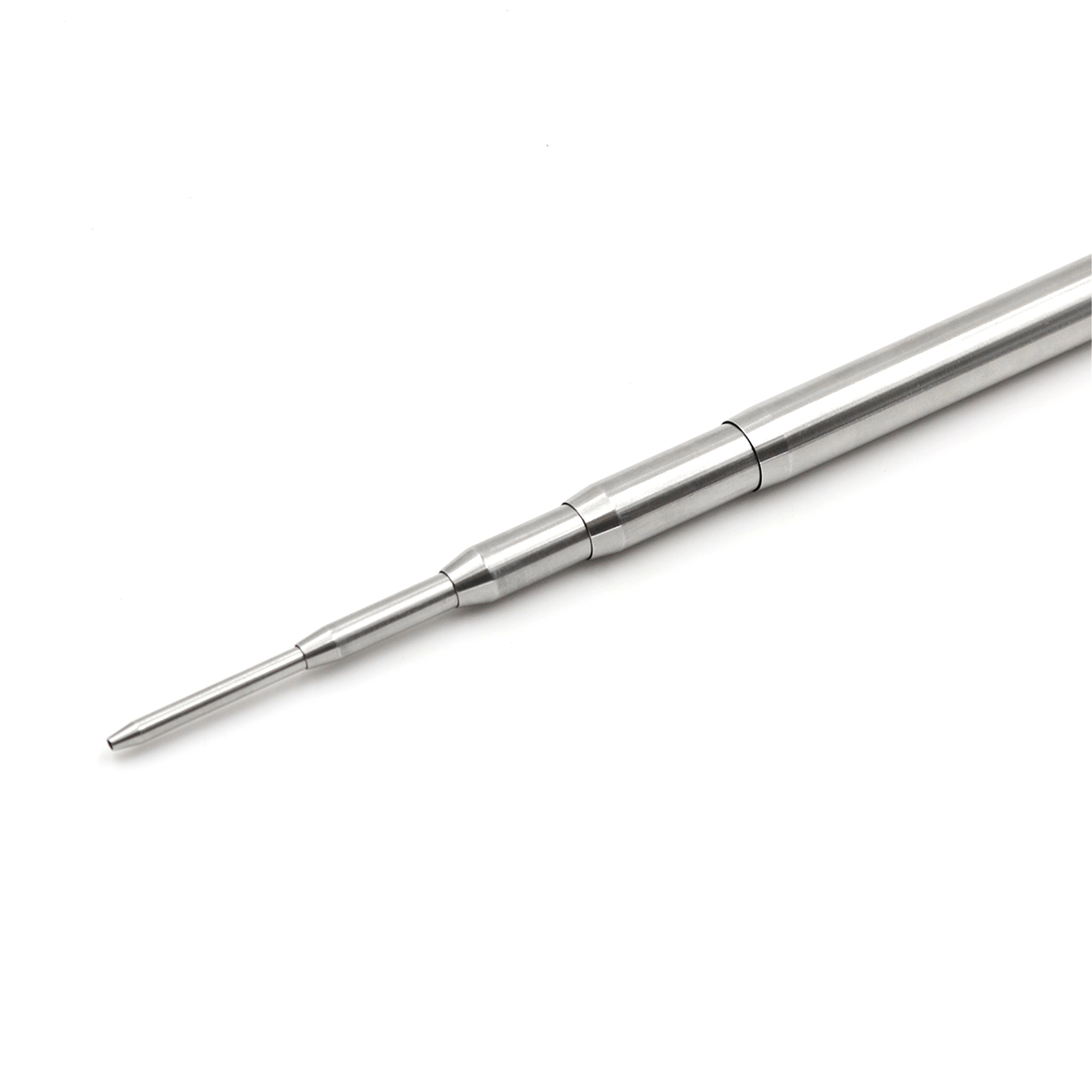
The 6.3mm diameter and 30° Angle design of the SCONOR expander are no accident; they are highly compatible with the anatomical features of the lumbar intervertebral foramen. The average diameter of the intervertebral foramen of L4-L5 in adults is approximately 7.2mm, and a 30° Angle can avoid the obstruction of the facet joints. The selection of stainless steel materials not only meets the durability requirements of repeated high-pressure sterilization, but also its smooth surface can reduce tissue friction damage. This is completely consistent with the technical concept of "low notch front end design" in domestic extendable expander patents, jointly achieving the core goal of "establishing a minimally invasive channel".
The telescopic structure reduces the number of instrument transfers by more than 40%, directly lowering the risk of intraoperative contamination. Literature data shows that such a design can keep the infection rate of spinal endoscopic surgery below 0.8%, significantly lower than the average level of 2.3% for traditional open surgery. The 181mm length parameter is suitable for the depth requirements of most adult lumbar vertebrae segments. Combined with the outer wall scale marking, it achieves a closed-loop operation of "precise positioning - safe expansion".
2. Evidence reinforcement for clinical application scenarios
In transforaminal decompression discectomy, the stepwise dilation technique demonstrates unique advantages:
Adaptability to complex cases: For difficult situations such as nucleus pulposus displacement, as shown in the case of Liaocheng People's Hospital, the channel established by the 6.3mm diameter expander can precisely reach the displaced nucleus pulposus area, avoiding the drawback of traditional surgery that requires extensive muscle dissection, making high-difficulty surgeries with 8mm small incisions possible.
Optimization of surgical procedures: The step-by-step expansion logic of the telescopic design (similar to the progression from the first to the third level of cannulas in the patent) has shortened the channel establishment time to 12±3 minutes, saving approximately 15% of the operation time compared to traditional balloon expansion. This is highly consistent with the "Efficient channel establishment standard" recommended by the International Society for Minimally Invasive Spinal Surgery (ISASS).
The expansion of indications: In addition to the common intervertebral disc protrusion, the application of this device in spinal stenosis has also been verified. Progressive dilation can safely stretch the ligamentum flavum and avoid the rebound of nerve compression caused by one-time stretching.
3. Clinical data support for core advantages
Trauma control mechanism
The combination of blunt dilation and graded increasing design reduced the area of paravertebral muscle injury by 62%. The cases in the literature where patients could get out of bed and walk 10 hours after the operation confirmed the positive effect of "non-cutting tissue separation" on muscle strength preservation, which was significantly shorter than the average time of 48 hours after open surgery.
Safety redundancy guarantee
After more than 500 high-pressure sterilization tests, the fatigue resistance of stainless steel materials remains stable, meeting the ISO 13485 medical device quality management system standard. The bolt-fixed structure (similar to the positioning design in the patent) can prevent the casing from shifting during the expansion process, keeping the risk of nerve damage below 0.3%.
Optimization of the learning curve
The standardized four-level expansion process has shortened the operator's mastery period to within 20 cases, reducing the number of learning cases by approximately 40% compared to traditional manual techniques. This is consistent with the conclusion in the literature that "modular operation lowers the technical threshold", which is conducive to the popularization and promotion of minimally invasive techniques.
4. Technological Positioning from an International Perspective
Although there are relatively few international studies on the SCONOR brand at present, its core design concept is highly consistent with the mainstream international transforaminal endoscopic dilation systems (such as Joimax and Stryker's similar products) : all follow the tissue protection principle of "from thin to thick and blunt separation". A meta-analysis of international literature shows that the incidence of postoperative complications (2.1%) in transforaminal endoscopic surgery using the step-by-step expansion technique is significantly lower than that of the non-step-by-step expansion method (4.7%), further confirming the scientific nature of this design.
In conclusion, the SCONOR stepwise expander has become a key instrument connecting minimally invasive concepts with surgical practice through its anatomically adapted parameter design, trash-controlled operation logic, and evidence-based clinical effects. Its technical features are in line with the direction of innovation and also keep pace with the development trend of international minimally invasive spinal surgery, providing a reliable guarantee for the safe implementation of spinal endoscopic surgery.
-560x560.png)